The Aylesbury estate was selected by Tony Blair for his first speech as prime minister on 2nd June 1997, where he made his ‘forgotten people’ speech, saying there must be no more “no-hope areas” in new Labour’s Britain.
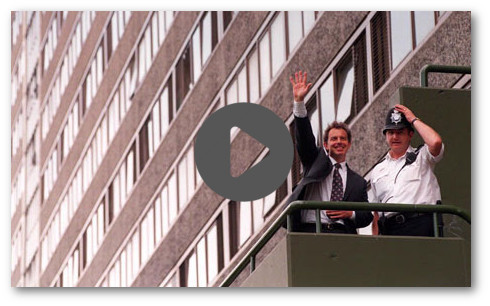
Blair visiting the Aylesbury in 1997 to give his first speech as prime minister
“Behind the statistics lie households where three generations have never had a job. There are estates where the biggest employer is the drugs industry, where all that is left of the high hopes of the post-war planners is derelict concrete. Behind the statistics are people who have lost hope, trapped in fatalism.” (Tony Blair, inaugural speech, May 1997)
Blair vowed to ‘learn from the mistakes of the past’ and replace the dogma of bygone housing policies with pragmatism and common sense. The estate’s regeneration was subsequently initiated as part of New Labour’s ‘Urban Task Force’ inner-city renewal programme. The project was subsequently awarded £56m funding under the ‘New Deal for Communities’ partnership and regeneration plans were drawn up to transfer the estate to a housing association for redevelopment.
Failed Ballot

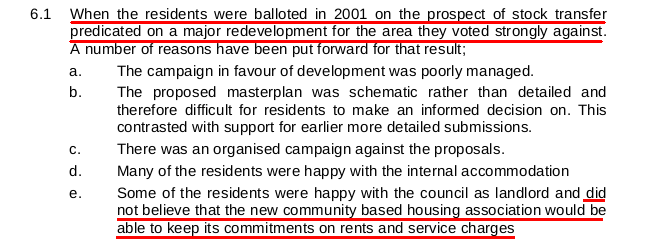
In 2001, residents on the estate were balloted on the prospect of stock transfer and redevelopment. There was a high turnout (73%) and over 70% of residents voted against the proposals. This council Executive report postulates that one of the reasons behind the ‘NO’ vote was that residents were concerned that they would have to pay higher rents and service charges on the redeveloped estate.
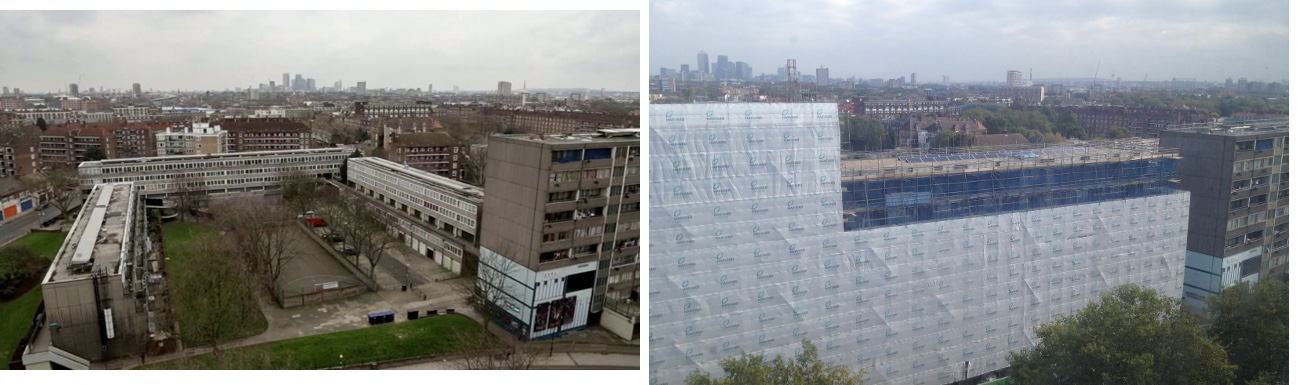
In 2002, the council’s Head of Housing Regeneration said it was planning to press ahead with the redevelopment regardless, claiming that bringing the existing estate up to scratch would cost £200 million, a sum that the council simply didn’t have. The Council then instructed consultants Capita to develop a ‘manifesto for change’ and a ‘renewal strategy .. that culminated in 2005 with the council deciding on a strategy for the demolition and redevelopment of the area’.
Harvard Gardens
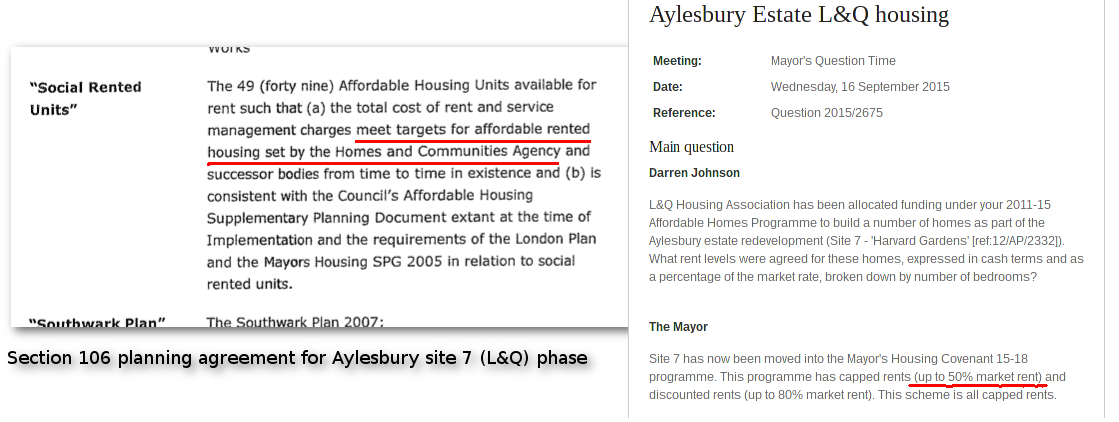
The first two minor phases of the scheme, phase 1a and (site 7 - Wolverton/’Harvard Gardens’) were developed by L&Q. Site 7 comprises 147 new homes, of which 48 were supposedly be for ‘social rent’. However, the section 106 planning agreement for the site says ‘affordable rent’ and a question put to the Mayor confirms that these will be let at affordable rent of up to 50% market rent.
Refurb vs Demolition
At the 2015 CPO Public Inquiry, Professor Jane Rendell from the Bartlett School of Architecture questioned the council’s cost/benefit appraisal for its decision to redevelop rather than refurbish. She took the Inquiry through all of the figures and showed that cost estimates for refurbishment had been inflated by nearly £150m. (See AJ article).
Objectors gave evidence showing that later phases of the estate had been allocated funds under the council’s WDS programme (Decent Homes Standard works programme). They showed the Inquiry section 20 invoices that they had been sent by the council, detailing the estimated cost of the Decent Homes Standard major works charges, i.e. bringing the homes up to modern standards. These showed that homes on the estate were being brought up to Decent Homes Standard at an average cost of just £20,261 per home1.
It was also revealed that the Council could end up losing £85m on the scheme while Notting Hill is guaranteed a 21% protected profit.
According to Notting Hill’s 2015 viability assessment its 21% profit extracted from the redevelopment was estimated to amount to £163m2.
When the Council Executive took its decision to redevelop the estate in September 2005, it did so on the basis of a costings estimate which calculated that the scheme would incur an overall cost to the Council of £16.1m over the scheme’s 10-year development period.
In 2020, Southwark agreed to bail out Notting Hill Genesis after it experienced cash-flow problems by funding the construction of the social rented homes that Notting Hill was required to build.
In 2025, it was revealed that the Council has spent more than £350m on the scheme to date - more than its (inflated) estimate for refurbishing the estate.
The scheme has also been allocated 46m from the government’s Estate Regeneration Fund and £27m from GLA funding to date, plus £13m of HCA funding (for the completed phase 1 of the scheme). In addition, the scheme has received £56m from the government’s NDC (New Deal for Communities) programme.
Six Acres estate
Other London boroughs take a different approach to regeneration. Islington has an estate called the Six Acres estate near Finsbury Park. The Six Acres estate was built at the same time as Heygate & Aylesury, by the same contractors (Laing) using the same system (Jespersen 12M).
Instead of demolishing its estate and handing it over to the private sector at a loss, Islington Council chose to refurbish the Six Acres estate in 2012. The 473 homes on the estate were refurbished with new external wall insulation, new entry doors, exterior furnishing improvements, green roofs and cycle shelters.
Extensive research by the University College London and case studies by leading architects has shown that refurbishment is better not just financially, but also socially and environmentally.
More information about the Six Acres estate regeneration can be found here, here, here, here and under planning application ref: P072153 on Islington Council’s Planning Portal.
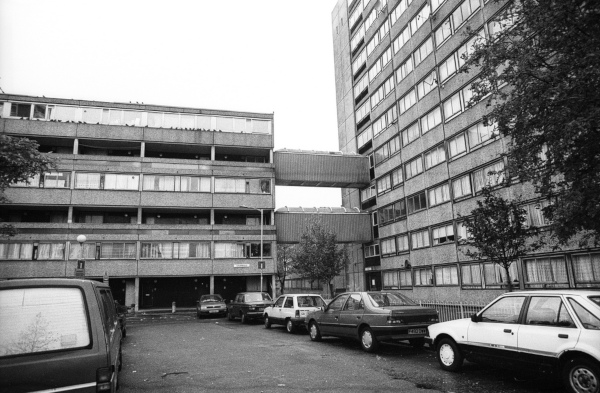 Photos of Six Acres before regeneration
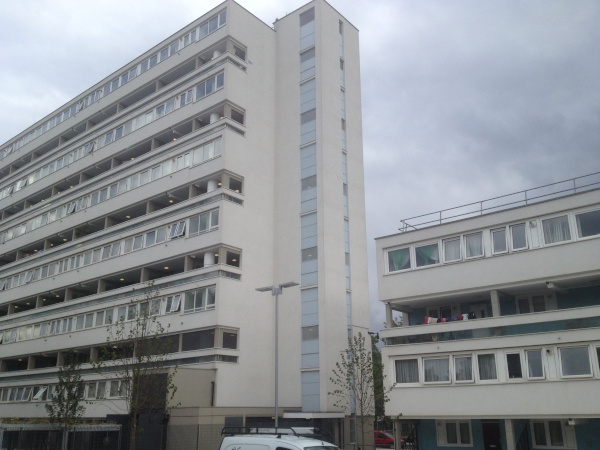 Photos of Six Acres after regeneration
The London Borough of Wandsworth also has an estate made with the same construction system as the Aylesbury estate - the Doddington & Rollo estate in Battersea. Wandsworth has no plans to demolish the estate.
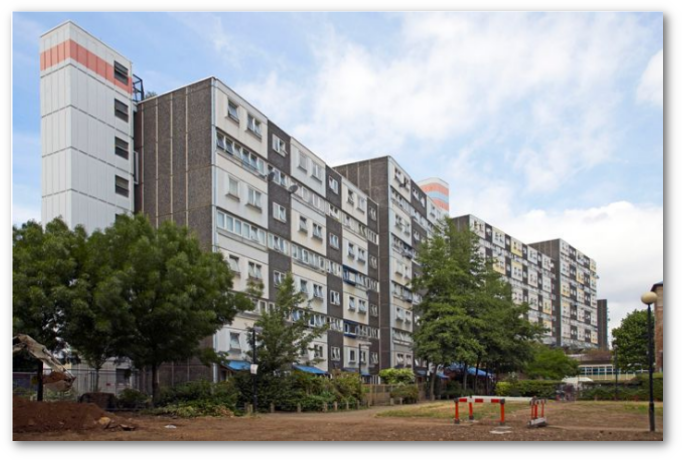 Doddington & Rollo estate in Battersea
Community facilities
The Council has argued that the regeneration is providing public benefits including a new library, a new GP clinic, and new nursery facilities. But what is not publicised is that Notting Hill is only contributing £9m towards the £38m cost to the Council of delivering these facilities.
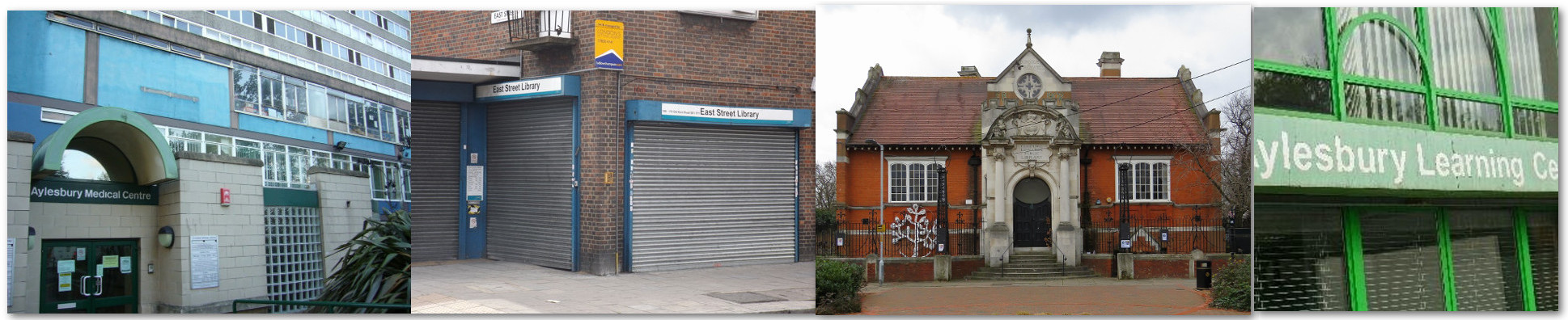 Aylesbury Medical Centre, East St Library, Wells Way Library, Aylesbury Learning Centre
Neither is it being publicised that a vast array of community facilities on the existing estate are not being replaced.
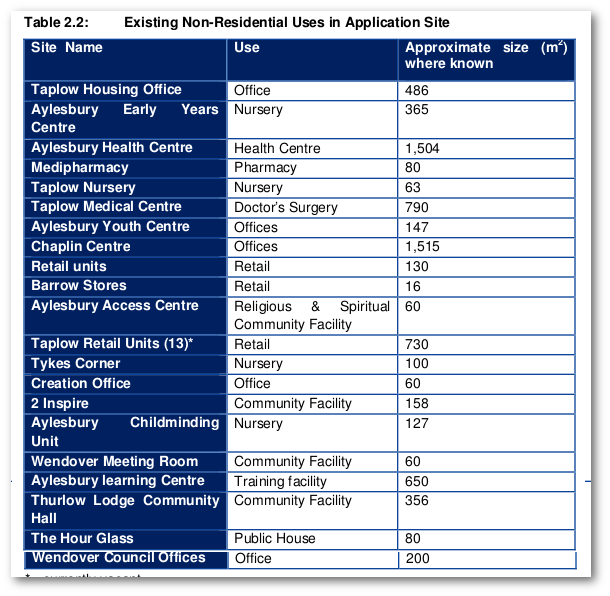 List of community facilities being lost
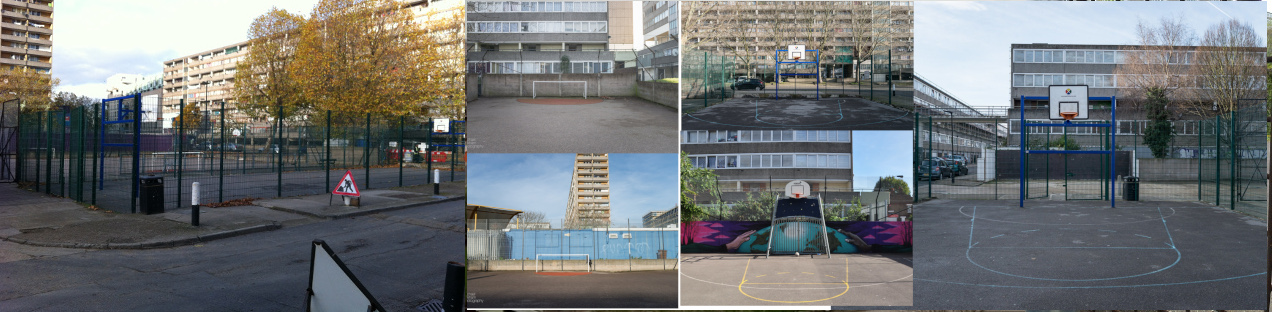
In addition, there are four multi-utility games courts on the estate which are due to be built on and not replaced.
Environment/Sustainability
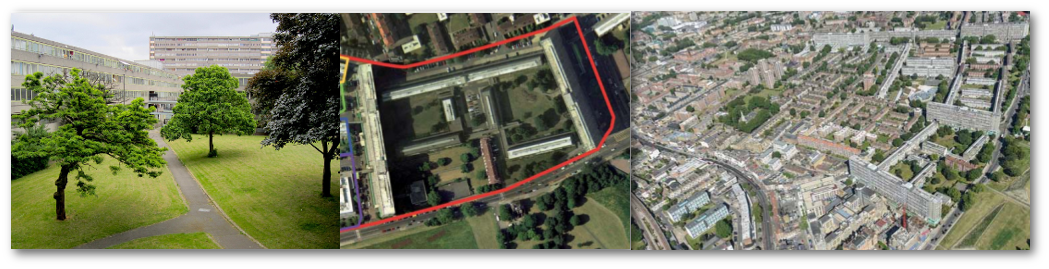 Generous existing green open space that will not be replaced
Despite the fact that the redeveloped estate will be a stone’s throw from the new Bakerloo line station on the Old Kent Road, the Aylesbury estate masterplan outline planning application gave consent for a total of 1,378 parking spaces in the new development, equating to four out of ten new households with parking.3
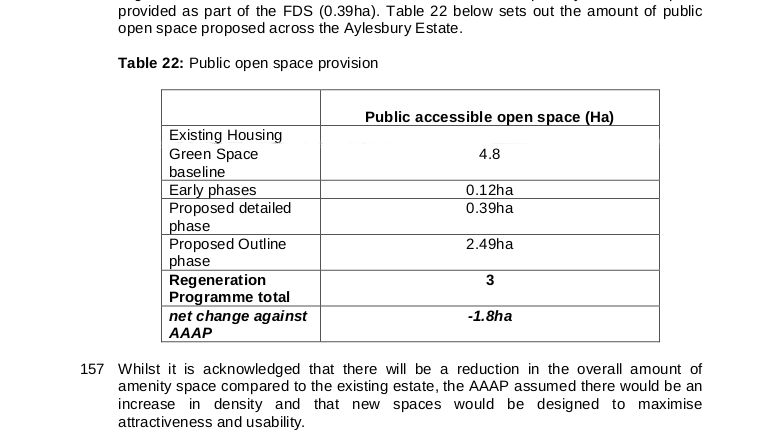
The planning committee report for the Aylesbury masterplan application also confirms that there will be a net loss of 1.8 hectares of open space as a result of the redevelopment:
Aylesbury diaspora
Loretta Lees, a leading professor of Human Geography has published a study researching the displacement of Aylesbury estate tenants as a result of the regeneration.
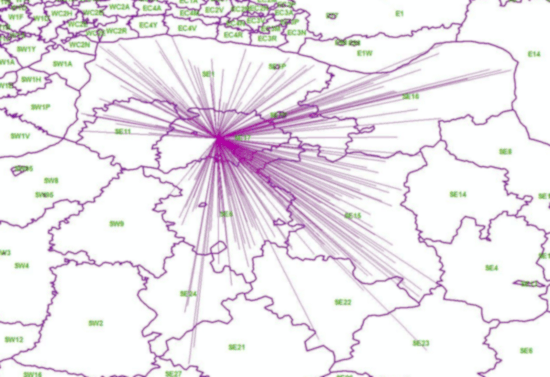
She also gave evidence to the Aylesbury CPO public inquiry showing how leaseholders were also being displaced, not just from the area but to outer boroughs and beyond as a result of the low compensation payments they receive. Her evidence shows that only 10% of tenants decanted to date have been rehoused in new homes on the redeveloped estate and that of the circa 250 leaseholders decanted to date, only 7 have taken up shared ownership in new homes provided by the scheme.
In Sep 2016, the Secretary of State announced that he would be blocking Southwark’s application for a Compulsory Purchase Order, on the grounds that the scheme is in breach of basic human and equalities rights. The Secretary of State’s decision was based on the fact that many elderly residents and those from black and ethnic minority groups were being forced to relocate elsewhere, rather than being rehoused on the scheme footprint. Southwark subsequently appealed the ruling and successfully managed to convince the High Court to have the decision overturned.
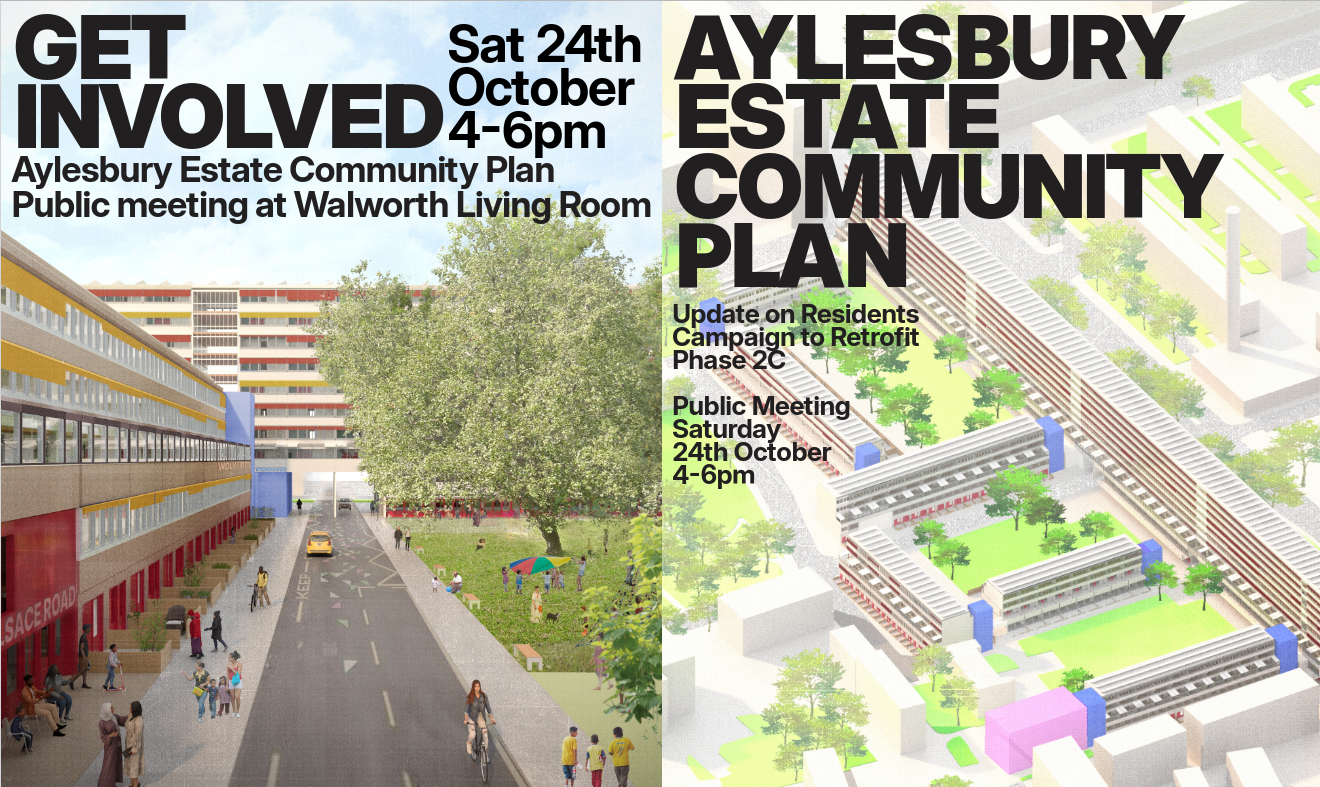
Aylesbury Community Plan
In October 2026, a group of Aylesbury residents assisted by architects Unit 38 launched the ‘Aylesbury Community Plan’ to promote a community-led retrofit programme for the remainder of the estate:
Misc links
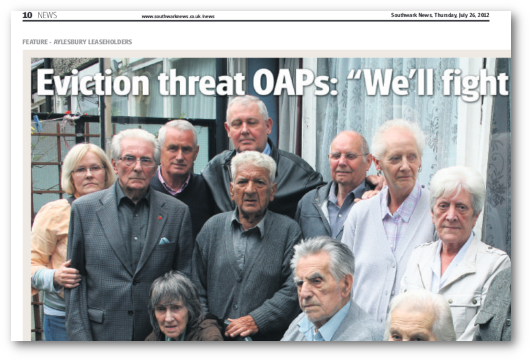 Eviction Threat OAPs - Southwark News article
Video footage of the 2015 Aylesbury estate CPO public inquiry.
2005 Frost Associates report.
April 2005 BPTW report.
(Redacted) Development Partnership Agreement(DPA).
(Redacted) DPA Appendix 7 - Business Plan.
Audit showing community spaces lost
Video clips
2015 CPO proofs of evidence
Jackie Fearon - Aylesbury Area Manager, Southwark Council
Elaine Taylor - Senior Regeneration & Development Manager, L&Q Housing
Mark Maginn - Sales & Acquisitions Manager, Southwark Council
Tim Cutts - Planning Policy Team Leader, Southwark Council
Jane Seymour - Development Partnership Broker, Southwark Council
Press articles
https://widerimage.reuters.com/story/residents-resist-demolition
https://www.theguardian.com/society/2016/jul/13/aylesbury-estate-south-london-social-housing
Footnotes:
-
Pg 2 of the section 20 invoice shows that 611 homes are being brought up to Decent Homes Standard at a total cost of £12,380,030 - (average = £20,261). ↩
-
Paragraph 19 of the closed version of the above closed report says “Barratt will agree to pay NHHT at practical completion half of the private sale Gross Development Value (based on £451 per sqft) less 21% which they retain in profit.” ↩
-
See paragraph 2.5.1 of the masterplan application’s Transport Statement ↩